Friday, February 25, 2011

Middle East protests: Country by country


Egypt

Protesters call for President Mubarak to step down The military has been running the country since President Hosni Mubarak, in power for three decades, resigned on 11 February following weeks of protests in the capital Cairo and other cities. The Armed Forces Supreme Council is meant to keep charge for a transition period of six months, or until new elections are held.


An estimated two million people gathered in Cairo's central Tahrir Square on 18 February to celebrate a week since Mr Mubarak's departure from office, but also as a show of strength to remind the military to keep their promise of a swift transition to democracy.


The Islamist and conservative Muslim Brotherhood would be expected to do well in any free and fair elections, but fears of a lurch towards Islamist rule is the main worry for Western powers and Israel. Much of the unrest was driven by poverty, rising prices, social exclusion, anger over corruption and personal enrichment among the political elite, as well as a demographic bulge of young people unable to find work.


The new authorities have arrested three ex-ministers for corruption including former Interior Minister Habib el-Adly and steel tycoon Ahmed Ezz. But the military government has said it will not tolerate any more strikes which disrupt the country's economy.

Tunisia


President Ben Ali fled after weeks of protests Protests have continued in Tunisia since President Zine al-Abidine Ben Ali's decision to step down in January. He fled the country following weeks of anti-government demonstrations and clashes between protesters and police.


The trigger for the protests was a desperate act by a young unemployed man on 17 December. Mohamed Bouazizi set fire to himself when officials in his town prevented him from selling vegetables on the streets of Sidi Bouzid without permission.


Mr Ben Ali is now in a coma at a Saudi hospital after suffering a stroke, reports say. Tunisia has formally requested his extradition, saying he is wanted for serious crimes including inciting killing.


Parliamentary Speaker Foued Mebazaa has been sworn in as interim president and has asked Prime Minister Mohammed Ghannouchi, head of the government since 1999, to form a national unity government. The prime minister has also pledged to step down after elections in about six months' time.


Some analysts believe that Islamists have been organising in the country, pointing to a rally outside the interior ministry in Tunis on 18 February to demand the closure of a brothel.

Morocco


Morocco has seen a spate of protests in recent weeks Thousands of Moroccans joined nationwide protests on 20 February to demand that King Mohammed hand over some of his powers to a newly elected government and make the justice system more independent.


The main opposition group has warned the "autocracy" will be swept away unless there are deep economic reforms. Morocco has been facing severe economic problems. It has announced an increase in state subsidies to try to counter commodity price rises.


Earlier this year, the country's reputation was damaged after Wikileaks revealed allegations corruption involving the royal family and the people close to King Mohammed. The king says the fight against poverty is a priority, earning him the name "guardian of the poor". Economic liberalisation has attracted foreign investment, and officials point to better basic services in shanty towns and rural areas.


But some non-government groups say little has changed, with poverty still widespread and unemployment remaining high. Morocco is dogged by strikes by both private and public. Morocco, like Egypt and Algeria, does allow limited freedom of expression and has so far been able to contain protests. Like Jordan it is a monarchy with strong support among sections of the public.

Algeria


The funeral of an anti-government protester Sporadic protests against the rule of President Abdelaziz Bouteflika have been continuing since early January.


Recent attempts to march through the capital Algiers were broken up by huge numbers of riot police. Protest groups united in their opposition to the government include small trade unions and minor political parties.


The trigger for the unrest appears to be mainly economic - in particular sharp increases in the price of food.
Mr Bouteflika has promised to lift the country's state of emergency - in place since 1992 - in the "near future". Algeria's government has considerable wealth from its oil and gas exports and is trying to tackle social and economic complaints with a huge public spending programme.

Libya

Pro-Gaddafi supporters out on the streets during a ceremony to mark a prophet's birth Protests against Colonel Muammar Gaddafi's rule have left an unknown number of people dead and injured since 16 February.


Eastern Libya, including the second city, Benghazi, has fallen to anti-government rebels. Gaddafi loyalists still control the capital, Tripoli, and parts of the west.


In two TV addresses, Col Gaddafi blamed drugs and al-Qaeda for the uprising. On 22 February, he warned that anyone who played games with the country's unity would be executed, citing the way the Chinese suppressed protests in Tiananmen Square as an example. Government blocking of the internet and curbs on foreign media make it difficult to establish a full picture of the scale of the unrest.


Protests of any kind are prohibited in Libya but the latest unrest was triggered by the arrest of a lawyer who is an outspoken critic of the government. In power since 1969, Colonel Gaddafi is the longest-serving ruler in Africa and the Middle East, and also one of the most autocratic.


Jordan


Protesters in Jordan celebrate the success of protests in Egypt There were clashes in the capital Amman on 18 February when anti-government protesters were confronted by demonstrators loyal to King Abdullah.


Stones were thrown and eight people were injured in the scuffles, activists said. Thousands of Jordanians have taken to the streets over the past five weeks, demanding better employment prospects and cuts in foods and fuel costs.


In response, King Abdullah II sacked Prime Minister Samir Rifai over the slow pace of reform and appointed Marouf al-Bakhit, a former army general and ambassador to Israel. A new 26-member cabinet was sworn in on 10 February.


The Hashemite Kingdom of Jordan is a small country with few natural resources, but it has played a pivotal role in the struggle for power in the Middle East. The death of King Hussein, who ruled for 46 years, left Jordan still struggling for economic and social survival, as well as regional peace

Syria


Calls for a "day of rage" to coincide with the fall of Egypt's President Hosnic Mubarak failed to materialise into a demonstration and so far the country has remained calm. President Bashar al-Assad has promised to push through political reforms after inheriting power from his father, Hafez, in 2000, after three decades of authoritarian rule.


The country remains under emergency law, in place since 1963.


Following the death of Hafez al-Assad, Syria underwent a degree of relaxation. Hundreds of political prisoners were released. But the granting of real political freedoms and a shake-up of the state-dominated economy have not materialised.

Saudi Arabia


One of the most devout and insular countries in the Middle East, Saudi Arabia has emerged from being an underdeveloped desert kingdom to become one of the wealthiest nations in the region thanks to vast oil resources.


But its rulers face the delicate task of responding to pressure for reform while combating a growing problem of Islamist violence. It has always been in the ruling Al Saud family's interests to preserve stability in the region and to clamp down on radical Islamist elements. Opposition movements are banned within the country.


Regionally, the country is important with King Abdullah Bin-Abd-al-Aziz Al Saud regarded in the Arab world as a supporter of wider Arab interests. It was to Saudi Arabia that Tunisia's ousted leader, Zine al-Abidine Ben Ali, fled in January.

Bahrain


Shia protesters demand change The Sunni Muslim monarchy has offered talks to representatives of the country's disaffected Shia majority following days of unrest which saw the main square of the capital Manama occupied by protesters.


After using troops to clear the protesters from the Pearl Square on 17 February, in an operation which left four people dead, the government appears to have stepped back, allowing demonstrators to re-occupy it after initial resistance by police.


US President Barack Obama has appealed for restraint in Bahrain, which is strategically important to America. King Hamad has asked his eldest son, Crown Prince Salman, to start a "national dialogue" to end the unrest.


Senior members of the main Shia political group, Wefaq, have called for the government to resign. Other demands are believed to include the release of political prisoners and talks on a new constitution. Shia protesters complain of economic hardship, lack of political freedom and discrimination in jobs in favour of Sunnis.

Iran


Protests in the Iranian parliament against opposition to the government Long-simmering unrest over the disputed 2009 presidential election boiled up again on 14 February.


Thousands of people heeded calls by the two main opposition leaders to rally in the capital Tehran in solidarity with pro-democracy protests across the Middle East. Security forces cracked down on the protest and two people were killed and others injured.


Supporters of the government have been calling for the opposition leaders, Mehdi Karoubi and Mir Hossein Mousavi, to be executed. Iran's complex and unusual political system combines elements of a modern Islamic theocracy with democracy.


The Supreme Leader, Ayatollah Ali Khamenei, is the highest power in the land. He appoints the head of the judiciary, military leaders, the head of radio and TV and Friday prayer leaders. He also confirms the election of Iran's president.
President Mahmoud Ahmadinejad, elected in 2005, is a hardliner who has vowed to put down any protests


Yemen


Anger on the streets in Yemen At least five people were killed on 18 February during widespread anti-government demonstrations in Yemen.


Four people were killed in the southern port city of Aden by gunfire as police moved to disperse protesters, medical officials and witnesses said. In the city of Taiz, one person was killed and many injured when a grenade was thrown from a car at protesters.


And in the capital Sanaa, supporters and opponents of President Ali Abdullah Saleh clashed on the streets.
Yemen's president announced on 2 February that he would not seek another term in office, after three decades in power.


He also told parliament that he would not hand over power to his son, saying: "No extension, no inheritance, no resetting the clock."


Yemen is the Arab world's most impoverished nation, where nearly half of the population lives on less than $2 a day

Yemen: Protester killed in Aden on day six of unrest

At least one man has died during a sixth day of anti-government protests in Yemen, reports say.


The victim was reportedly hit when police fired shots into the air to try and break up around 500 protesters in the southern port of Aden. In the capital Sanaa several people were injured during clashes between pro- and anti-government supporters.


President Ali Abdullah Saleh has been in power for almost 32 years in Yemen, the poorest Arab nation.


The president has already said he will not seek another term in office or hand over power to his son. But - inspired by the revolutions in Tunisia and Egypt - opponents continue to stage demonstrations. Twenty-one-year-old Mohammed Alwani became the first casualty of the protests in Yemen.


He was one of a number of people who were taken to hospital after reportedly being hit by police in Aden. Medics say he had been shot in the back and he died from his injuries. Angry protesters are reported to have set ablaze a municipal building and several cars in the port town.


Students vs loyalists


In Sanaa, hundreds of students heading for a protest near the presidential palace were attacked by several hundred supporters of the president, armed with batons, stones and daggers.
The students retaliated with stones and police intervened.


Pro-government supporters clashed with anti-government activists in the capital Sanaa "The thugs and supporters of the ruling party ... want to massacre" the students, the head of the university's student union, Radwan Masud, told AFP news agency.


"We'll keep protesting until the regime leaves," another student, Murad Mohammed, told Reuters news agency. "We have no future under current conditions."


At least 500 people who rallied overnight in the agro-industrial city of Taiz, south of Sanaa, vowed to camp out again on Wednesday night.

Tokyo, Japan playhouse architecture

                                                      Three level house relies on slides
                                                                       The design
                                                                       Playing area
                                                                     Courtyard
                                                                      Room for two

                                                          Sliding into the whole-way

Jessica Simpson Ready For Wedding


Jessica Simpson is ready for her wedding - she'll even skip the dress for something casual.


After photos surfaced this week of Jessica hitting the gym, some reports suggested the star was working out to lose weight before her wedding to former NFL player Eric Johnson - but Jessica says otherwise.

"Yes,I am working out,but why is that worth any sorta press?" Jessica Tweeted on Thursday. "I always take care of myself. Eric and I could get married right now in sweats!"

Jessica and Eric began dating in May 2010, and became engaged in November 2010. According to People, the couple hopes to wed by Christmas 2011.


"We're just going to enjoy the engagement, and we'll get married the moment we feel like it," she told the mag in December.

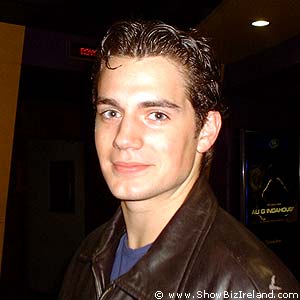
henry cavill british actor

Henry William Dalgliesh Cavill born 5 May 1983 is a British actor. He has appeared in the films The Count of Monte Cristo and Stardust, and played the role of Charles Brandon, 1st Duke of Suffolk, on the Showtime series The Tudors, from 2007 until 2010. He has been cast to play Superman in the 2012 film Superman: Man of Steel.
Contents
* 1 Early life
* 2 Career
* 3 Filmography
* 4 References
* 5 External links
Early life
Cavill was born on the island of Jersey in the Channel Islands, the fourth of five boys. His mother, Marianne, worked in a bank, and his father, Colin Cavill, was a stockbroker. He was educated at St. Michael's Preparatory School in Saint Saviour, Jersey before attending Stowe School, a boarding school in Buckinghamshire, England. He began acting in school plays during prep school, has said that if he hadn't become an actor, he would have joined the armyor gone to university to study ancient history or Egyptology.
Career
Cavill had his first film role in Kevin Reynolds' 2002 adaptation of The Count of Monte Cristo. He went on to star in Laguna (2001), and afterwards appeared in BBC’s The Inspector Lynley Mysteries (2002), the TV movie Goodbye Mr. Chips (2002), and the TV series Midsomer Murders (2003). In 2003 he had a supporting role in I Capture the Castle, followed by Red Riding Hood (2004), Hellraiser: Hellworld (2005), and Tristan & Isolde (2006). He had a minor role alongside Sienna Miller and Ben Barnes in Matthew Vaughn's adaptation of Stardust (2007).
From 2007 to 2010, Cavill had a leading role in Showtime's television series The Tudors as Charles Brandon, 1st Duke of Suffolk. The series was well-received: it was nominated for a Golden Globe in 2007 and won an Emmy in 2008. Cavill credits the show to bolstering his career: "It’s done the most for me to date. [. . .] Now that there's an audience somewhere in America that’s aware of who I am, I have more sell-ability, because of The Tudors."Entertainment Weekly named him the "Most Dashing Duke" and praised his work on The Tudors for displaying "charm, depth and a killer bod".
Cavill had been set to star as Superman in director McG’s 2004 film Superman: Flyby. However, McG pulled out of the project and direction was taken over by director Bryan Singer, who recast Brandon Routh as the lead. Cavill was also the cause of a write-in effort of fans to see him cast as Cedric Diggory in Harry Potter and the Goblet of Fire (2005). The role eventually went to Robert Pattinson. Stephenie Meyer, author of the Twilight series, was outspokenly in favor of Cavill playing the character of Edward Cullen in the Twilight film, calling him her "perfect Edward". By the time production of the movie began, however, Cavill was too old to play the character, and again the role went to Robert Pattinson. In 2005, Cavill was a final contender for the role of James Bond in Casino Royale.The producers and director Martin Campbell were torn between him and Daniel Craig; reportedly Campbell supported Cavill but the producers preferred an older Bond. Craig landed the role. In their December 2005 issue, Empire magazine dubbed Cavill the "Unluckiest Man in Hollywood" for this series of near-misses. reports that he was a contender for Batman in Batman Begins, Cavill confirmed that he never auditioned for nor was offered the role.
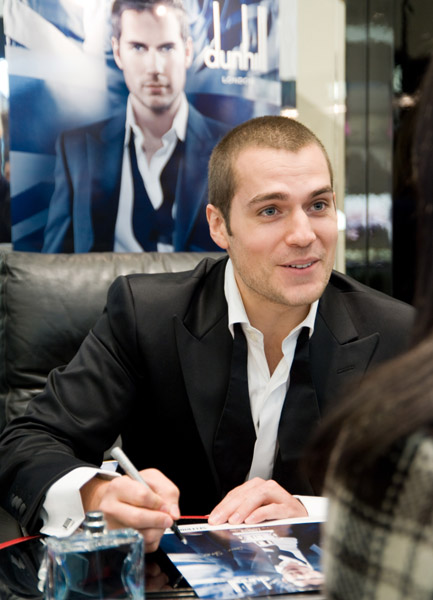
In early 2008, Cavill became a model/spokesperson for Dunhill fragrances. The television ad featured a suited-up Cavill walking through the Union Jack flag, before mounting a helicopter. A second television ad featured Cavill driving a car through a deserted London at night, and meeting with a young woman. He starred in director Joel Schumacher's horror film Blood Creek (2008) and in 2009 he had a minor role in Woody Allen’s comedy film Whatever Works.
Director Tarsem Singh cast Cavill in the lead role of Theseus in his mythological, big-budget special effects film Immortals, to be released November 11, 2011.In 2011 Cavill will star alongside Bruce Willis in The Cold Light of Day. On January 30, 2011, it was announced that Cavill had been cast in the role of Clark Kent/Superman in director Zack Snyder's Superman: Man of Steel. Snyder called Cavill "the perfect choice to don the cape and S shield."
Filmography
Film
Year Film Role Notes
2001 Laguna Thomas Aprea Main Role
2002 The Count of Monte Cristo Albert Mondego Main Role
2003 I Capture the Castle Stephen Colley Main Role
2004 Red Riding Hood Hunter Main Role
2005 Hellraiser: Hellworld Mike Main Role
2006 Tristan + Isolde Melot Main Role
2007 Stardust Humphrey Minor Role
2009 Blood Creek Evan Marshall Main Role
Whatever Works Randy James Minor Role
2011 Immortals Theseus Main Role
The Cold Light of Day Will Main Role
2012 Superman: Man of Steel Clark Kent / Superman Main Role
henry cavill
henry cavill
henry cavill
henry cavill
henry cavill
henry cavill
henry cavill
henry cavill
henry cavill

Thursday, February 24, 2011

Beyonce under fire for blackface cover

Beyonce graces the March issue of L'Officiel Paris, but it's a controversial photo of the superstar inside the French fashion magazine that's getting the most attention.

In a statement, L'Officiel describes the Feli-inspired photo of Beyonce -- sporting blackface, tribal paint and a dress designed by her mom -- as a "return to her African roots, as you can see on the picture, on which her face was voluntarily darkened."

Not everyone is a fan of the editorial vision and tribute to Kuti; the image simultaneously inspires and provokes. Writes Jezebel's Dodai Stewart: "It's fun to play with fashion and makeup, and fashion has a history of provocation and pushing boundaries. But when you paint your face darker in order to look more 'African,' aren't you reducing an entire continent, full of different nations, tribes, cultures and histories, into one brown color?"

"It's one thing to feel moved by Fela Kuti, and quite another to treat blackness as a fashion accessory, like a pair of glittery heels you put on because it looks cool," Stewart adds.

Charing Ball, a writer at the Atlanta Post, blasts the fashion industry's recent obsession with blackface as an accepted form of racism passed off as art. "Blackface is not fashion forward or edgy and, in my opinion, it is just flat-out offensive," writes Ball, incriminating Beyonce in perpetuating the offense.

Blackface has been particularly trendy among European fashion titles; in October 2009, French Vogue featured a white model in blackface a year after the Italian edition of Vogue ran a much-hyped issue with all-black models as a response to the lack of diversity within the industry.
Meanwhile, Beyonce and other black stars have had their skin lightened on the cover of glossy women's mags and in advertisements; (see Beyonce's 2008 L'Oreal ad) compared with a real photo of the singer. See also: (Actress Gabby Sidibe's 2010 Elle magazine cover) wherein her dark skin appeared several tones lighter.

"The message we're getting from the fashionistas," Stewart writes, "is that it's bad to actually have dark skin, but totally cool to pretend you have it."

Beyonce will no doubt maintain a diplomatic stance on the photoshoot. But, for once -- for once! -- it would be refreshing to hear her speak her mind and have a stance on something beyond her music.

Hollywood’s Most Bankable: How the Kardashian Klan Made $65 Million


As a whole, the Kardashians raked in $65 million in 2010 due to their lucrative endorsement deals, three reality shows, public appearances and Kardashian-themed products, a source revealed to the Hollywood Reporter.


The crux of their runaway success is family matriarch Kris Jenner, who explained to the mag, “My job was trying to take my kids’ 15 minutes and turn it into 30.”


Just how did she pull it off? Her youngest, Khloe Kardashian, believes it’s a natural talent for turning “water into wine” that made all the difference. “She knows how to take one small talent or ability and grow it into something huge,” she says.


With all those millions, the Kardashians seem to have every intention of expanding their brand. This year they plan to open a “celebrity destination store” at the Mirage Casino in Las Vegas. What’s more, their pictures will soon be printed on the casino’s room keys, bottled water and slot machines.


Rest assured, they didn’t take every offer that came their way on their road to fortune. Kris said “Hell to the no” to a sex toy company’s offer to produce a line of “vibrating panties, nipple rings and vibrators” inspired by Khloe and her 6′ 10″ husband Lamar Odom.

Do you think this is it? ummhhhh